


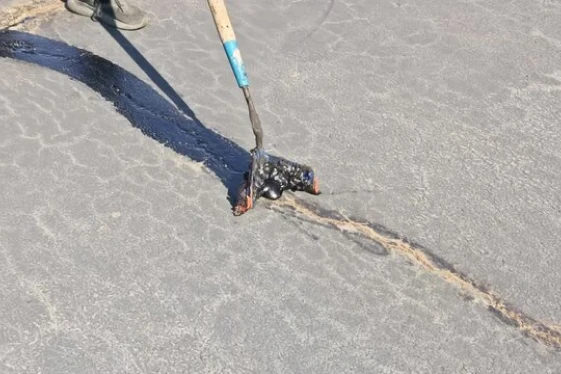
The thin line running across your parking lot is doing more damage than it lets on. Every rain sends water through the crack and into the layers below, where the base that holds your pavement together slowly breaks down. Asphalt crack fill services seal that opening before a small repair turns into a full repave. Filling a crack costs a few dollars per linear foot, while replacing failed pavement runs into the thousands. For any commercial property owner, sealing cracks early is one of the simplest ways to protect the lot and avoid far bigger bills later.
What are Asphalt Crack Fill Services?
Asphalt crack fill services involve professional filling and sealing of cracks using materials built to bond, flex, and block water. Crews clean each crack before applying filler or sealant, creating a barrier against moisture reaching the base beneath the surface. This work goes beyond improving the pavement’s appearance because stopping water at the surface helps protect the structure supporting the entire lot.
How the Crack Fill Process Works
The service may look simple on paper, but the results depend heavily on how the work is carried out, with most jobs following three key stages.
Cleaning and Preparation
Crews clear out debris, dirt, and weeds, then dry the crack completely. Deeper or moving cracks get routed first, which cuts a clean channel for the material to grip and holds it in place far longer.
Filling or Sealing
Hot or cold material goes into the crack and is leveled flush with the surface. The aim is to fill the void completely, leaving water no gap to slip through and no edge to lift.
Curing and Reopening
The material sets fast, and most lots take traffic again the same day. That quick turnaround is a large part of why crack filling fits so easily into a working property’s schedule.
Prepared properly, the finished crack becomes a sealed, flexible barrier. Skip the cleaning and the material peels away within months, which is where bargain jobs fall apart.
Why Cracks Form in the First Place
Knowing the cause makes the fix make sense. Asphalt cracks for a handful of predictable reasons:
- Water and freeze-thaw: Moisture works into the crack and expands as it freezes.
- Sun and UV exposure: Heat dries out the binder and leaves the surface brittle.
- Traffic and heavy loads: Constant weight flexes and fatigues the pavement.
- Age and oxidation: Asphalt hardens over the years and loses its flexibility.
- Base movement: Shifting or settling ground opens cracks from underneath.
These forces never take a season off, which makes early crack sealing and regular follow-up repairs essential for keeping pavement protected as new cracks develop.
Why Asphalt Crack Fill Services Matter
The real value shows in what the service prevents. Each benefit points toward the same result: a lot that lasts longer and costs less to keep.
Keeping Water Out of the Base
Water is asphalt’s worst enemy, and a crack is its front door. Once moisture soaks the gravel base, that foundation softens and shifts, and the surface above starts to fail from below. Filling the crack slams that door shut. Protect the base and everything above it holds, because no amount of surface repair can save a foundation that has already washed out.
Stopping Small Cracks From Becoming Potholes
Small pavement cracks can quickly become bigger problems. Left untreated, the damage tends to follow the same downhill path every time:
- Water gets in: It seeps through the opening and saturates the base.
- Ice takes over: Freezing and thawing widen and deepen the gap.
- The surface gives: The weakened spot crumbles under traffic.
- A pothole opens: What was a sealable line now needs a full patch.
Crack filling breaks that cycle at step one. Spending a little on sealant today can help prevent repairs that cost many times more later.
Extending the Life of the Pavement
Consistent crack filling can add years to pavement that would otherwise unravel much sooner. Regular maintenance keeps small cracks from opening further, which can push full repaving well down the road. Keeping water out also helps the asphalt retain its strength through changing seasons, turning routine crack filling into meaningful long-term protection.
Protecting Safety and Appearance
Protecting the pavement also helps protect the people and property around it. Cracks can trip pedestrians, catch heels, and make a lot look neglected, while clean, sealed pavement creates a better impression. Early crack filling helps slow surface damage while keeping the lot safer and better maintained, making it an important part of parking lot care.
Lowering Long-Term Repair Costs
The longer pavement stays protected, the less likely small defects are to become expensive repairs. Timely crack filling helps reduce the need for major restoration throughout the pavement’s service life. Research also shows that crack sealing can extend pavement life by several years at a fraction of replacement cost. Spending a little on maintenance now can help keep a much larger repaving bill out of next year’s budget.
Crack Filling vs. Crack Sealing
The two terms get swapped around, though they suit different cracks. Here is how they line up.
| Factor | Crack Filling | Crack Sealing |
| Best for | Dormant, non-moving cracks | Active, working cracks |
| Material | Cold or hot filler | Hot rubberized sealant |
| Flexibility | Limited | Flexes with movement |
| Lifespan | 1 to 3 years | 3 to 8 years |
| Relative cost | Lower | Higher |
The deciding question is whether a crack moves with heat and traffic, and a quick professional look settles which treatment each one actually needs.
When to Schedule Asphalt Crack Fill Services
Timing is what makes the service pay. Reach for it when you see:
- Cracks wider than roughly an eighth of an inch
- The run-up to winter, before the freeze-thaw season hits
- Any cracking spotted during a routine lot inspection
- A yearly slot built into your maintenance schedule
Sealing a crack while it is small always beats chasing it once it spreads. One yearly pass keeps a lot ahead of the damage instead of forever catching up.
What is the difference between crack filling and crack sealing?
Crack filling uses a filler for dormant, non-moving cracks, while crack sealing uses a flexible rubberized material for active cracks that expand and contract. Sealing lasts longer, filling costs less, and the right pick depends on the crack itself.
How long do crack fill services last?
Crack filling generally holds for one to three years, while sealing can last three to eight. The material, the traffic, and the quality of the prep all decide where a job lands in that range.
Can I fill asphalt cracks myself?
Small cracks can be filled with store-bought products, though the finish rarely matches professional work. Crews prep the crack correctly and use commercial-grade materials that bond better and hold far longer.
How often should cracks be filled?
Most commercial lots do well with a yearly inspection and crack filling as needed. Fresh cracks show up every season, so an annual pass keeps water out before it can reach the base.
Do crack fill services really prevent potholes?
Yes. Most potholes begin as untreated cracks that let water into the base, so sealing them early cuts the problem off at the source. It is one of the cheapest ways to avoid pothole repairs altogether.
Protect Your Pavement the Smart Way
Asphalt crack fill services are a simple part of pavement maintenance, but timing matters. Treating cracks while they are still small helps limit water intrusion, slow further deterioration, and reduce the chance of more expensive repairs later. Regular inspections make it easier to catch new cracks early and keep your parking lot in better condition over time.
With decades of experience serving properties across the Carolinas and Virginia, Satterfield Paving understands what it takes to keep commercial pavement maintained year after year. A free lot assessment can help you identify existing cracks and other problem areas before they require more extensive work.
Read More: 7 Performance Indicators For Evaluating A Paving Company
